Kerala by Lexie Wolf
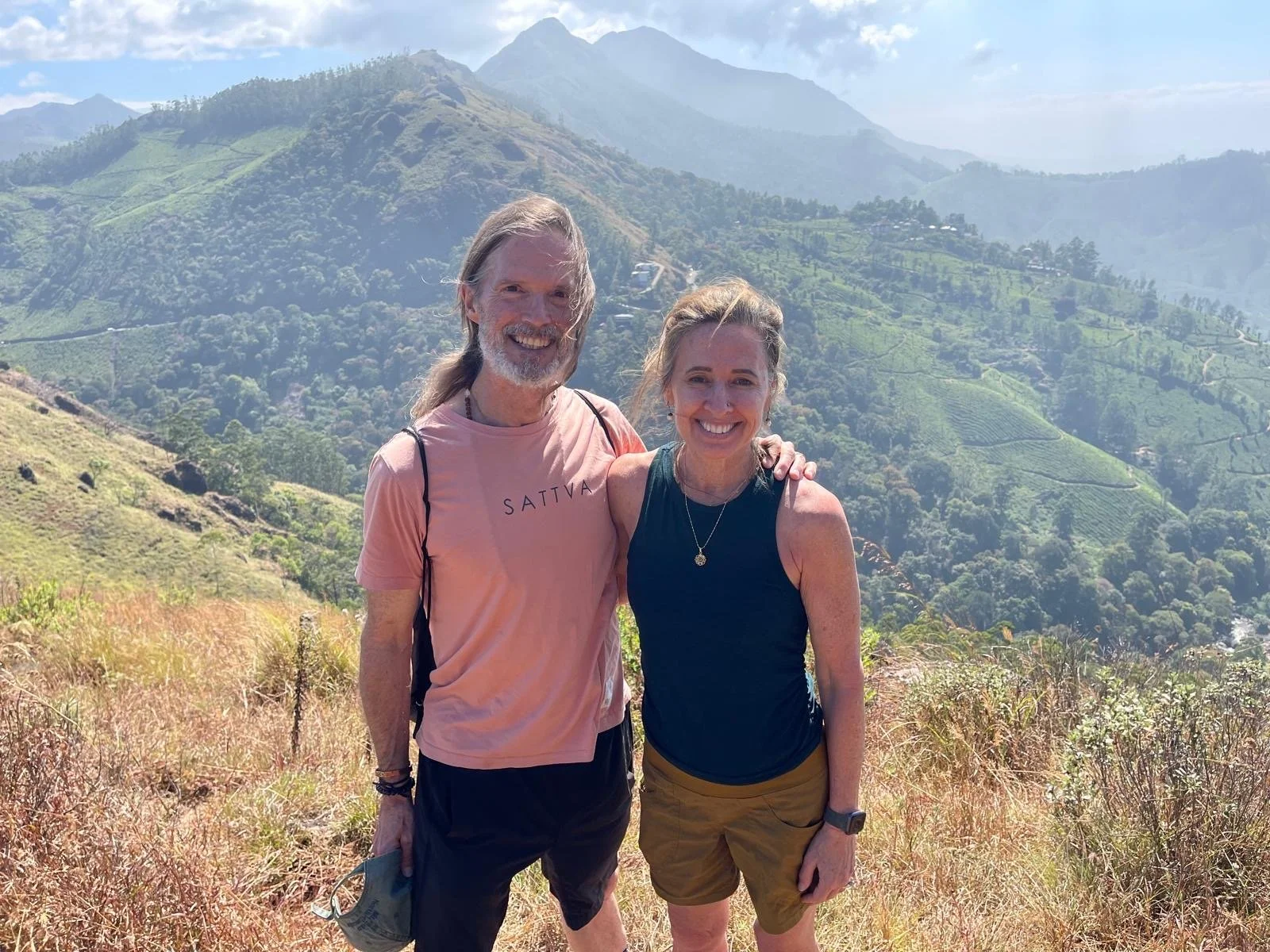
The sun has risen through the mist over the Western Ghat mountains in Kerala, South India. We’re enjoying a week of rest and adventure following the completion of our training, and already the teachings are asking to be lived, not just remembered. We’re both feeling inspired, open, and present after our immersion. It’s a good time to travel—and a good time to practice. This in-between space is giving us room to begin the 21-day sadhana (daily practice) that is our “homework,” preparing us for the challenge of maintaining our deep practices when we re-enter home life.
Kerala feels like part of the lessons. As we move through the state, we’re learning why it’s often described as an outlier within India—why there is less poverty and higher levels of education, and why Muslims, Christians, and Hindus live together easily here. Kerala is multicultural, matrilineal, progressive, complicated, and beautiful. And spicy. Very spicy. There’s a sense here of many paths being held at once, a living reminder that harmony doesn’t require sameness.
We first landed in Kochi, an ancient Arabian Sea port on the historic spice route. We expected history in Fort Kochi—and we found it—but we didn’t realize we’d also arrive in the middle of a thriving contemporary art scene. The “People’s Biennale” was underway during our visit, and the city felt alive with installations, performances, and exhibitions. The old town is such a tapestry: modern art cafés alongside spaces honoring regional folk traditions in dance and martial arts, a big working port and a bustling local seafood industry, and probably lots more. Tradition and reinvention side by side.
Our walking tour guide Ajita, a local teacher about our age, shared a great story about Kochi’s recent history. In the 1970s, as the city was declining and contracting, local young people—including her brothers—organized to help revive it and reimagine it as a center for art, culture, and tourism. In our program we talk about different kinds of dharma, and one of them is responding to what’s needed in the moment—taking action, even without knowing how it will unfold. The first thing they did was simple: they planted trees. From there, they organized events, drew visitors, and eventually the attention of the government, investors, visitors. What stayed with me was how it all began—not with certainty or strategy, but with intention, energy, and a willingness to try something new.
Now inland, in the Western Ghat mountains, we’re savoring cooler weather (I know, y’all at home are not impressed with cooler weather) and some rest. This region is the land of Big Tea. Are you sipping a cup right now? We learned from Vinita, a local lawyer, mother, and tour guide, about the immense labor that goes into producing white, green, or black tea from India—and how the workers on the tea plantations earn very little and are stuck in a cycle of limited options. This does not seem the norm in Kerala, which made it stand out. It was a sobering reminder that even in places doing many things right, there is still always work to be done. And that this, too, is part of practice: seeing clearly, staying open-hearted, and not turning away.
Tomorrow, we head to a beach area for a few days, our final stop before returning home. It feels like the last gentle exhale before re-entry—before carrying these teachings back into our ordinary life, and the spaces where we get to spend time with you, our community. So many people I love are sitting with quiet questions right now: How do we respond? Where do we begin? What can we do? Being here has reminded me that practice doesn’t always ask for the perfect answer. Sometimes it asks for steadiness, care, and small, sincere acts—planted like a seed and trusted to grow over time.
We miss you all very much. And as always, the best part about traveling is coming home. We’re the same, and we’re so different. As are you. Every day offers us that return and that new beginning. No matter where we’ve been.